A parade of Echidnas
August 4, 2020
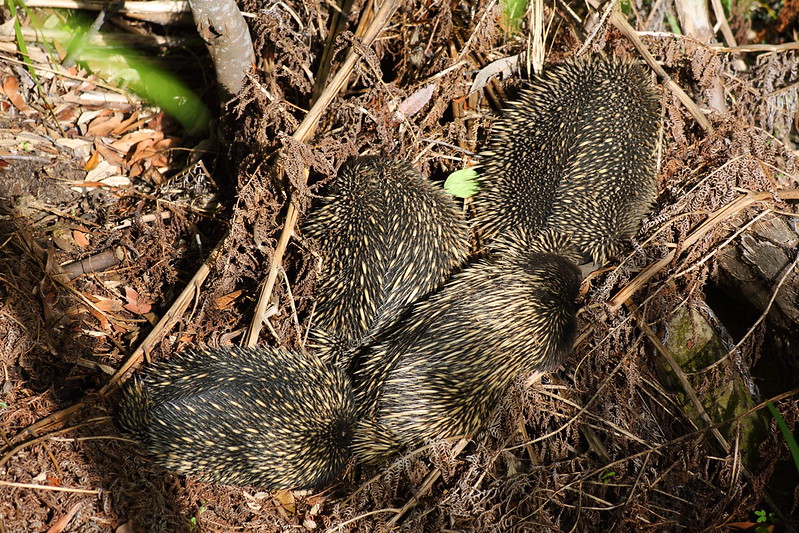
The Echidna, such an iconic Australian animal and unique too being one of only two monotremes, the other being the Platypus. We’re lucky enough to have Echidnas in the local area and even venturing into our yard from time to time. Last week I was looking out the window at home while making lunch and noticed what looked like an unusual rough clump on the ground. I went outside to have a look and it turned out to be a group of four Echidnas huddled together in the sun! They were not moving and appeared to be just relaxing. I’ve only seen lone Echidnas before, four in one place was amazing!
By Joe Lipson
read more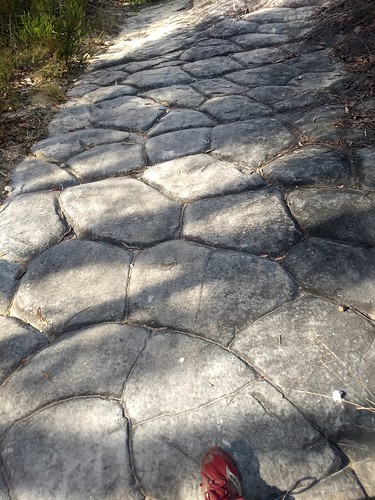
Unusual Sandstone Formations
June 18, 2020
There’s no shortage of sandstone in the Sydney area, almost the entire extent of Garigal National Park sits on what’s known as the Hawkesbury Sandstone. The Sydney 1:100 000 Geological Sheet classifies it as “Medium to course-grained quartz sandstone, very minor shale and laminite lenses” I wanted to highlight two sandstone formations, both of which are a bit of a mystery as to how they form. I came across these formations on a trail run on a section of single track in Belrose that runs from the end of Ralston Ave down to the Bare Creek trail next to Bare Creek. The first formation is called tessellated pavement.
By Joe Lipson
read more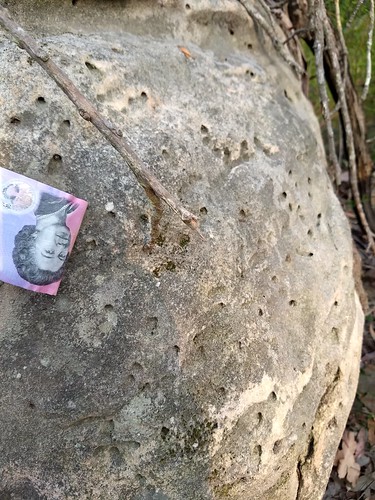
Holes and burrows in sandstone
January 23, 2020
In the bush nearby you can often see sections of sandstone that have clusters of regular sized holes around 10mm in diameter. Sometimes these pieces of sandstone are on a walking track where they get worn down to show the internal paths these holes take. I have a distant hazy memory of being told the holes are made by native bees. A bit of the old web searching brought up some more information!
By Joe Lipson
read more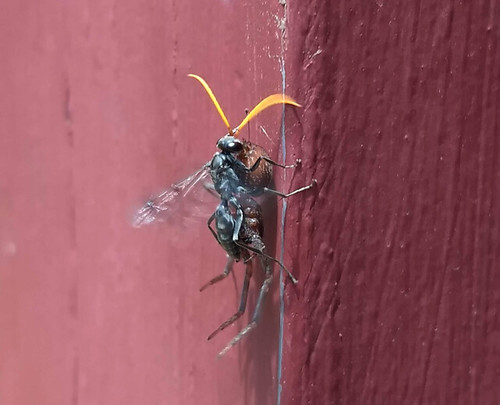
Spider wasp catching a spider
November 26, 2018
It was over a year ago that I first saw this flying insect that had caught a large spider and was dragging it off somewhere presumably to eat. I’d never seen anything like it and I spent a while researching to try and work out what it was. At the time I thought it was a robber fly but now I think it’s a spider wasp! Robber flys do indeed prey on some spiders and other insects but the images really dont look anything like what I’d seen. The spider wasp is a much closer match. I’ve seen a few now, here’s some pictures of a smaller spider wasp with another decent sized spider. This particular one was struggling a bit with it’s prey. It even tried to fly a bit and only just managed it. Looking at the picture the spider could easily weigh more than the wasp! Spider wasps are known to chop off the legs of the spider to make it easier to carry. All the ones I’ve seen the spiders are missing their legs. Nature is brutal!
By Joe Lipson
read more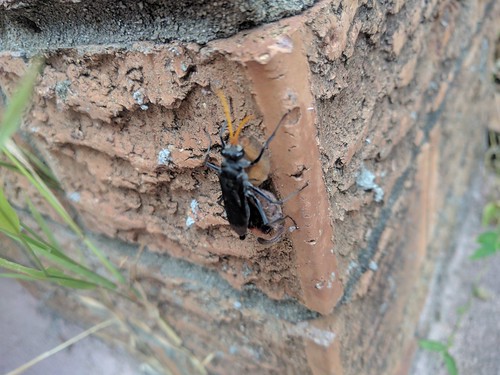
Have you ever seen a fly catch a spider?
January 26, 2017
[update] – When I wrote this I thought the creature was a robber fly, now I think it’s a spider wasp. Here’s something you don’t see every day, a large fly like creature walking along carrying a sizeable spider underneath it! Now that’s a prey reversal! A bit like seeing a huge rat hauling a dead cat somewhere. The fly was black, about 4cm in length with long legs that allowed it to carry the spider underneath it and still walk easily. The one I saw was on a mission to get somewhere, it walked quickly over the pavement for about 4m and then climbed a wall before I lost it. It had wings but didn’t try to fly, maybe the spider was too heavy for it. The spider was slightly longer than the fly and looked bulkier, all the spiders legs were gone and it was being carried inverted with it’s abdomen towards the front of the fly.
By Joe Lipson
read more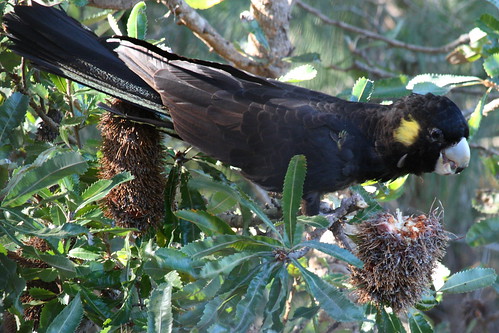
The Black Cockies are back
September 7, 2016
They’re back, and they still have an appetite for destruction! Every year about this time the black cockies visit for a day or two, tear up the Banksia trees in our yard then leave.
Black Cockie tearing up a Banksia
Sulphur Crested Cockies are here in abundance year round, Black Cockies only visit for a few days per year, sometimes I miss them altogether. Yellow tailed black cockatoos are larger than their sulphur crested cousins, they have a louder and more piercing shriek too. A few days before I saw the black cockies this year I heard a chilling shriek in the valley after dark, for a moment I thought it sounded like a person in distress, but I figured it was more animal like. After I saw the Cockies I now think that’s what it was.
By Joe Lipson
read more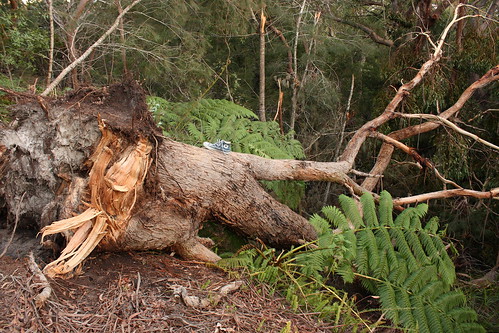
Sydney Peppermint Gum Blown Over
June 21, 2016
Eucalyptus piperita
“A small graceful tree to 15m high, but sometimes much taller” NOPS p.38
During the big storms a few weeks ago I was lying in bed at around 11pm just about to ready to go to sleep when a loud and prolonged cracking sound started coming from just outside the bedroom. I knew right away that the large Sydney Peppermint gum in the back yard was falling over! I jumped up and tried to get to the window but it was pitch dark and storming, I couldn’t a thing. As the cracking continued I was terrified it was going to fall on the house, luckily it went the other way and ended up taking out a sizeable swath of bush and other trees as it came down. Phew!
By Joe Lipson
read moreClimate update
June 13, 2016
I’ve updated the climate pages with the latest data from the BOM. If this summer felt long and hot to you then you’re right. The graph shows the average summer high is the hottest it’s been for 5 years. Looking at the 1 year averages the cooling trend that started in 2014 has reversed and we’re warming again. As always the longer term 30 year averages still show a very clear and consistent warming trend. The warming acceleration that started in 2013 is continuing. Still no update from the BOM on sea level measurements, we’re stuck at the end of 2014 with that. Rainfall data shows no clear long term trend, we’re pretty much smack in the middle of the historical long term measurements.
By Joe Lipson
read more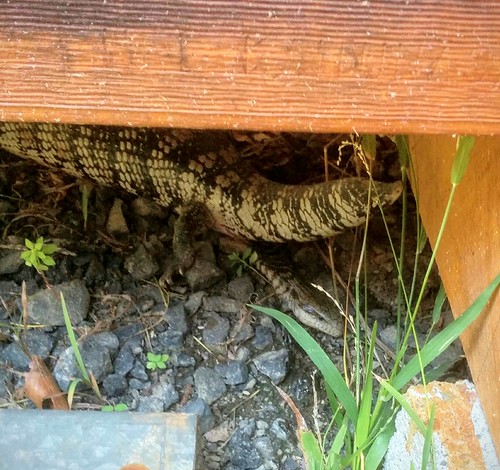
Blue Tongue Lizard giving birth
January 3, 2016
Tiliqua scincoides
Here’s an animal that every Australian knows. The Blue Tongue Lizard is common in bushland and suburban backyards of Eastern Australia, but even the familiar has the capacity to surprise as I found out with this one! The family was visiting friends in Gerringong 1 1/2 hrs south of Sydney. The kids came running in from the back yard saying they they had found a snake. We went out to take a look and found what was clearly a Blue Tongue Lizard half obscured under the back step. It’s legs were tucked under it’s body so it’s understandable that the kids though it was a snake. There was a small crowd of us watching it when it started to slowly lumber out of it’s hiding spot. The lizard seemed quite fat even for a Blue Tongue which I commented on, then all of a sudden a fully formed baby lizard popped out from the underside! It was a mum giving birth!
By Joe Lipson
read more