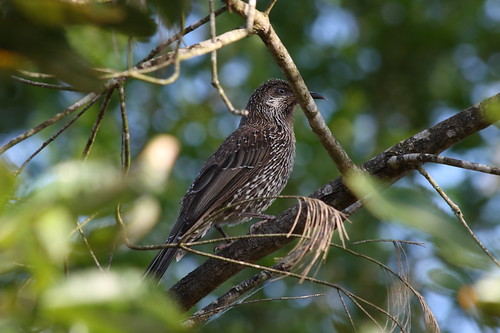
Little Wattle Bird
January 3, 2013
Anthochaera chrysoptera
You would think the Little Wattle Bird’s name comes from the abundant collection of wattle trees in it’s habitat. But I’m pretty sure it comes from it’s cousin species, the red and yellow Wattle birds. The Red Wattle Bird and Yellow Wattle Bird have prominent coloured wattles on their cheeks. The Little Wattle bird doesn’t have wattles itself, but the name remains.
Little Wattle birds are common in the back yard, they’re often seen eating the nectar from banksia flowers. I’ve not seen them on the bird feeder before, I guess they’re not fans of the native bird seed mix .
By Joe Lipson
read more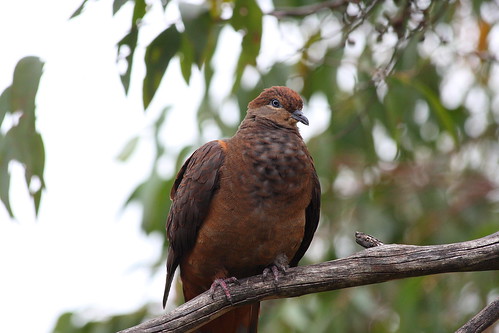
Brown Cuckoo-Dove
December 22, 2012
Macropygia amboinensis
The brow cuckoo-dove ( also known as the Slender-billed Cuckoo-Dove ) use to turn up from time to time but since installing the bird feeder out the back it’s one of the most common birds in the backyard! The species is found up the entire east coast and across Papua New Guinea and into Indonesia. Their specific habitat is rainforests and wet sclerophyll forest, particularly at the forest edges, along creeks and rivers. They are also found in regrowth areas and cleared land.
By Joe Lipson
read more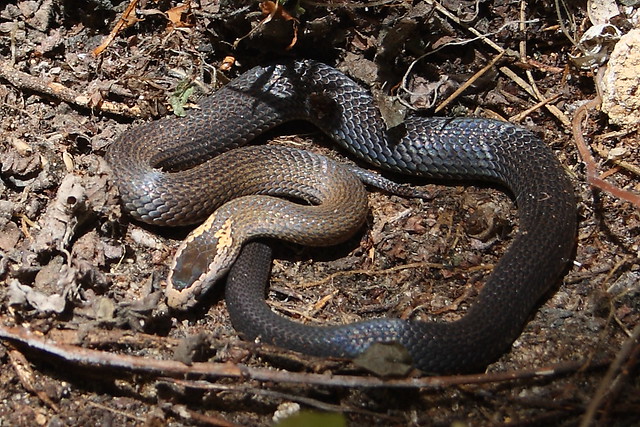
Golden Crowned Snake
November 18, 2012
Cacophis squamulosus
My wife found this snake under a house brick while gardening in the back yard. My 5 year old daughter identified it as a white crowned snake after reading a snake book that our neighbors had given her a few weeks earlier She was pretty damn close! After more consultation with the book we were confident this is actually a golden crowned snake. The crown marking on it’s head is quite distinctive, unlike the white crowned snake the golden crowned’s crown has a gap at the back of the head near the neck. It’s quite small, it would have been about 30cm long and about 1cm thick in the body just behind the head. It hung around for a few minutes after it was disturbed then calmly slithered away to hide under a nearby wood pile. We don’t often see snakes near the house, we were happy to have seen it, and it was great to be able to identify it too.
By Joe Lipson
read more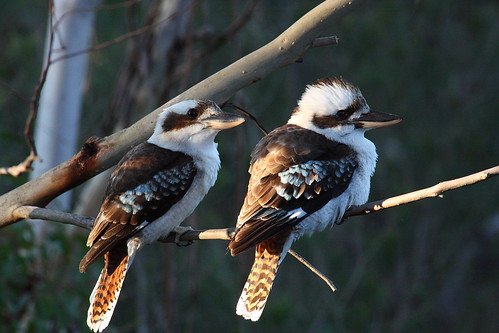
Kookaburras attacking the house
October 4, 2012
A few days ago a pair of Kookaburras started attacking an old steel air conditioner on the side of the house. They sit on a branch and take turns flying right at the thing, hitting it hard with their beaks. It makes a loud clang, sometimes they get their beaks stuck between the slats.
These are the 2 kookaburras that have been attacking the side of the house for the past few days. Don’t know why they’re doing it. They’re hitting an old steel air conditioner really hard with their beaks, sometimes their beaks get stuck between the slats
By Joe Lipson
read more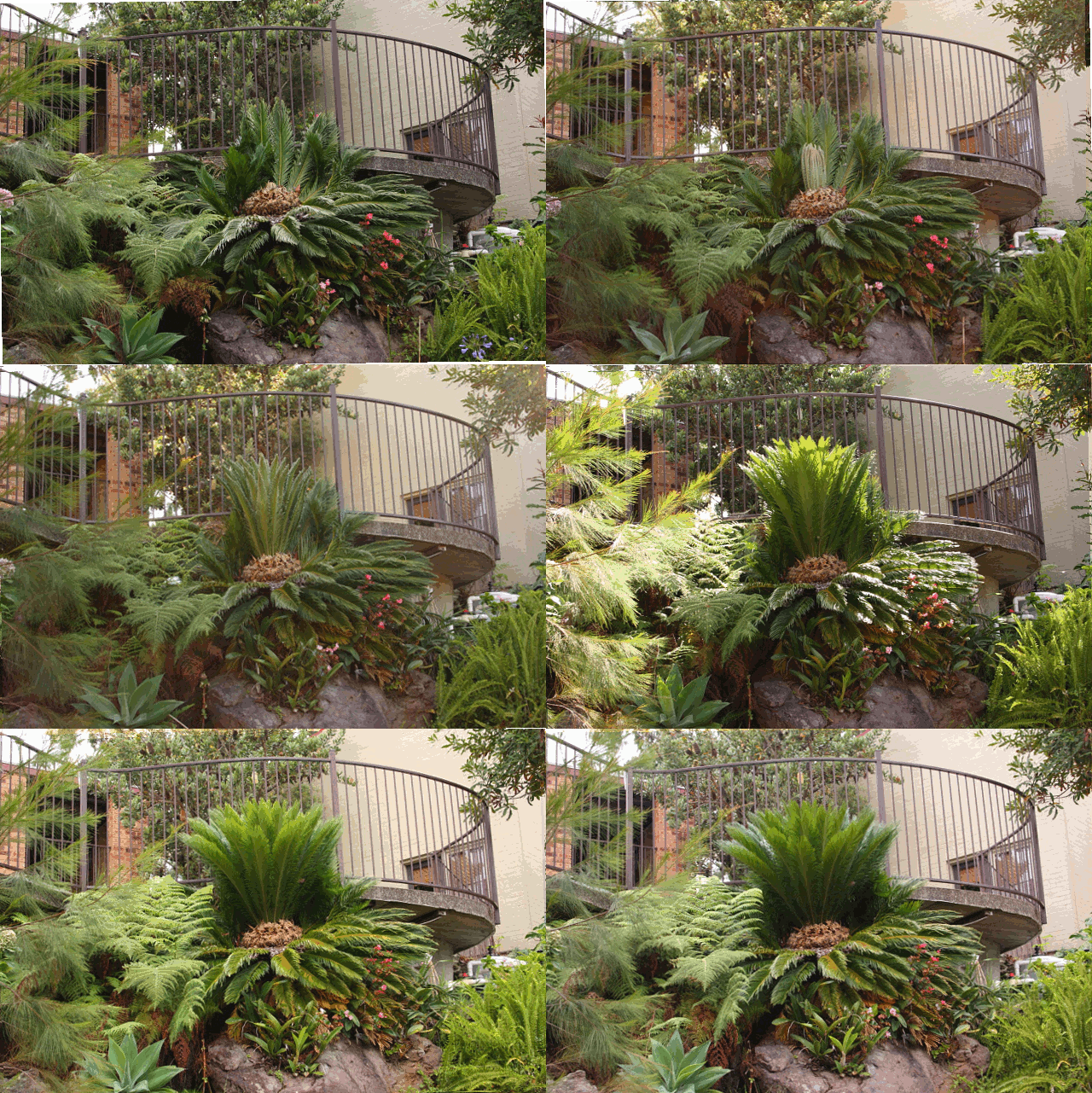
Cycad Time Lapse
February 7, 2012
Last year the big cycad in the front yard sprouted a bowling ball sized sphere from it’s center. It was bizarre looking, almost as if it was giving birth! The sphere eventually spread out and turned into a new generation of coralloid roots. It was quite amazing seeing it emerge so quickly, especially because apart from that there’s been no visible growth in over 2 years. This year I noticed the spear heads of a new generation of leaves sprouting from the center and decided to try and take a photo every day. Amazing to see it grow so fast. I wonder where all the matter to build those huge leaves was coming from so quickly, could it be taken from the soil and air on the fly or has the plant been building up some sort of reservoir over 2 years that can quickly be converted into rapid new growth?

By Joe Lipson
read more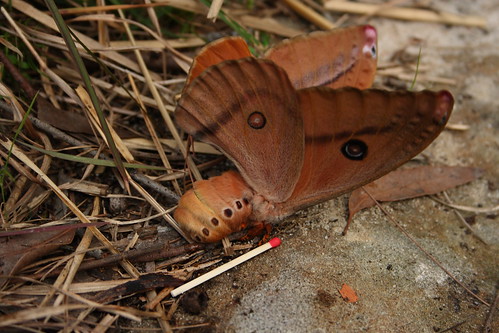
Monster Moth – Helena Emperor Moth
December 12, 2011
Opodiphthera helena
Jess spotted this huge moth on the rock ledge out the back one evening. It was just sitting there slowly beating it’s wings. It didn’t look injured, I wondered if it had recently emerged from it cocoon and was drying or stretching it’s wings.
Check out the match stick for some scale, it’s body was just monstrous.
I’ve been trying to work out what species this is. CSIRO’s what bug it that site looks comprehensive, but it is soooo slooow it’s excruciating. I’d usually click about quickly and explore but it takes over a full minute for a page to load, the site is unusable.
By Joe Lipson
read more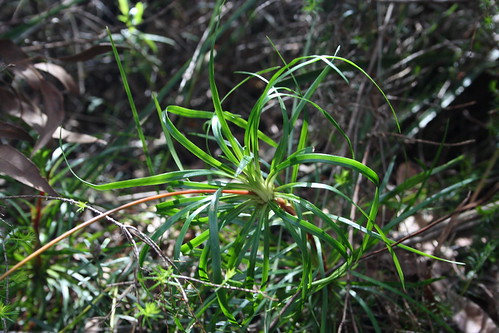
Trigger Plant
December 11, 2011
Stylidium productum
“A tufted herb with grass like leaves, found in moist forest situations.” – NPOS p.219
The trigger plant has developed the fascinating ability for movement fast enough to outdo animal reflexes. The trigger plant’s pollen producing anthers are located at the end of a stalk emanating from the center of the flower. The stalk is cocked back behind the flower like the hammer of a gun. When an insect lands it triggers the hammer which crashes onto the insect, showering it with pollen. The insect then flies away to fertilize the next trigger flower it lands upon. The flower resets itself in 20 minutes, ready for it’s next customer.
By Joe Lipson
read more
Types of Soil Found in the Sydney Area
November 21, 2011
Ever wondered about the soil in your area? Where did it come from, what will grow in it, how does it respond to flooding or drought? Apart from being of gereneral interest these questions are pretty important depending on what you want to use the land for.
Any construction requires knowledge of the soil’s physical and chemical properties such its stability, will it deform when wet, how far down to bedrock, is the soil corrosive? And if you want to grow anything: Is the soil fertile, is it acidic or basic, clayey, sandy, are there any salinity problems?
By Joe Lipson
read more
Crucifix Orchid
November 20, 2011
Epidendrum ibaguense
The crucifix Orchid is popular among the houses in our area. It must have been fashionable at some time in past, or possibly have spread itself from a single stating point. It’s a hardy plant that has taken over large areas of the garden without any special care. It grows as dense stands to about 1.5m high. Individual plants consist of a thin bamboo like central stem with thick oval shaped leaves sprouting directly off it in an alternating pattern.
By Joe Lipson
read more