Teddy Bear Bee
Amegilla bombiformis
I’ve been unsuccessful ( [update] – Found some! ) so far in my search for the Australian native Blue Banded Bee that is responsible for these Holes and Burrows in Sandstone. I found something else though! It’s another native Australian bee called the Teddy Bear Bee.
While in the garden I head a loud buzz coming from a bush. It was of low frequency and sounded like it belonged to something of decent size. After a short search I found it’s source, a single large chunky bee flying from flower to flower. It didn’t land and instead hovered briefly in front of one flower before moving to the next. It looked similar to a European honeybee but it was larger and chunkier. Despite several attempts I couldn’t get a sharp photo, below is the best of a bad bunch.
Cycad is at it again
It’s been 5 years since the cycad sprouted new leaves, it’s just done it again! According to this University of Wisconsin page many cycads produce leaves, at most, once a year. Which I take means that it could be several years between growths. Before this year the last few years have been very dry here, I wonder if the cycad has been waiting for more water before sprouting.
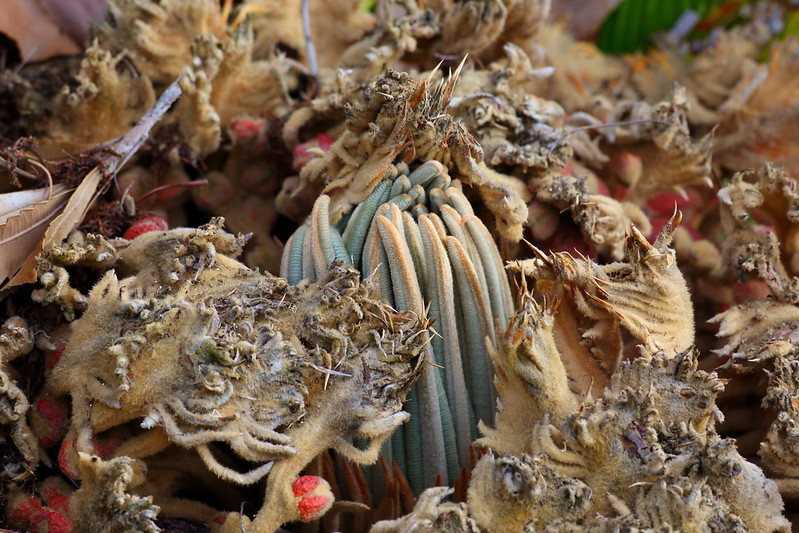
A new generation of leaves just starting to emerge from the center of the Cycad
Middle Harbour River Monster
Since the Covid restrictions and working from home I’ve been doing a lot more running on the local trails. While running down by Middle Harbour river in the winter months some days the water boils and churns like there’s something very large thrashing about down there! It’s happened on many occasions but it’s only been once or twice that it’s been close enough to get a decent look at. The thrashing covers a patch of water approximately 3×3 meters and is usually close to the shore. It can stop and start over a period of a few minutes, each time lasts between 5 and 20 seconds.
Channel-billed Cuckoo
Scythrops novaehollandiae
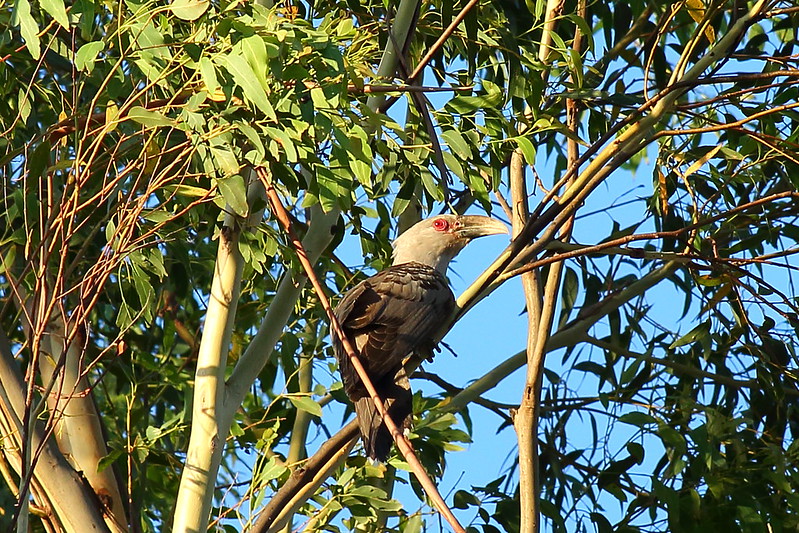
Even though the Channel-billed Cuckoo only visits northern and eastern Australia from around August to March I’m surprised not to have taken note of it earlier. It’s a distinctive looking bird, quite large with a huge beak and red eyes. In flight it looks sleek and almost hawk like. The other birds don’t take a liking to it ( and for good reason! ) and can be seen chasing and harassing it.
Water Gum
Tristaniopsis laurina
“A small spreading tree usually 4-10m high with handsome foliage and distinctive pale bare sheeny bark” - NPOS p. 371
The water gum is a common tree found on the east coat of Australia from the Brisbane River in Queensland through NSW down to Gippsland region of Victoria. It flowers in summer with groups of small yellow flowers with 5 rounded petals.
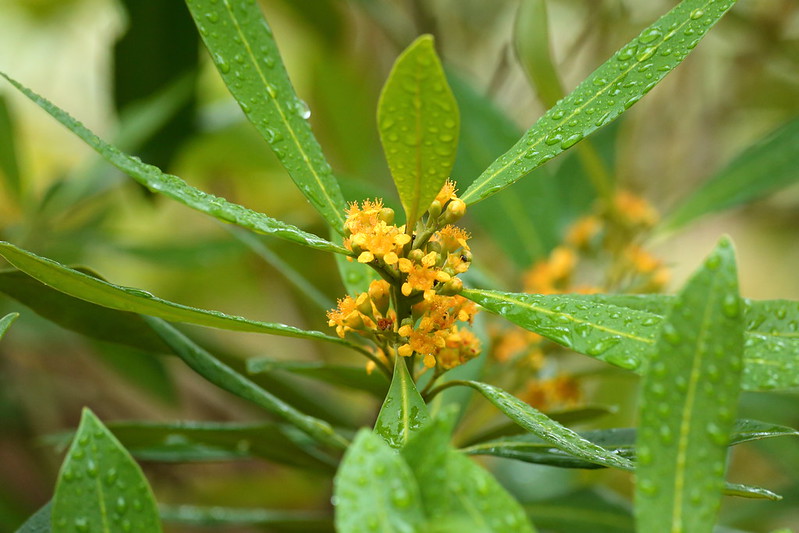
Flowering Water Gum in the wet. Flowers are said to have a strong smell but my nose couldn’t detect much
Climate update
I’ve recently updated the Sydney temperature, sea level and rainfall pages to include the latest data available from the BOM. In case you’ve not seen these before a quick explanation: The BOM provides long term weather observations for the Observatory Hill weather station going back as far as 1859. It’s an amazing resource, when graphed over time you start to see some cool trends emerge. I’ve set it up so you can graph the raw observations or select to see moving averages from 6 months up to 30 years. For the shorter time periods the observations can be all over the place, even the 10 year averages fluctuate up and down but selecting the 30 year averages show clear trends. Except for rainfall! In Sydney at least it’s all over the place with no clear trend over the last 160 years, there are 10yr or so patterns that i think correspond to El Nino and La Nina events. Anyway, go check them out Sydney Temperature Sydney Sea Level Sydney Rainfall
Steel Blue Sawfly Larvae
While running in the rain I came across this group of sawfly larvae moving together en masse in the middle of the trail. I’m glad I spotted them, a misplaced foot could really have ruined their day!
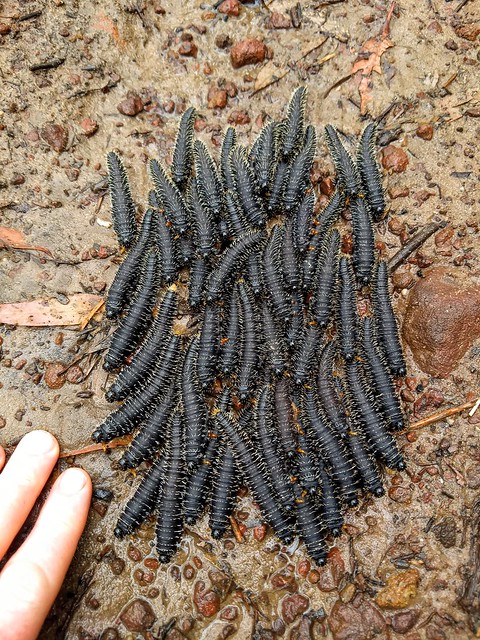
This group of Steel Blue Sawfly Larvae was wriggling its way across a wet bush trail
I’ve seen these guys before, they are commonly known as spitfires due to their habit of regurgitating a thick yellow irritating fluid when they feel threatened. I stopped to take a few photos while my running partner caught up. She was a bit grossed out but fascinated too. I touched a few of them, they are soft and squishy, the hairs on their body are nowhere near as spiky as they look. When I got too close they would all start raising their tails and thumping them back to the ground, it was quite a sight! We said our goodbyes and left them where we found them, I hope they got where they were going to safely. See my previous post on Sawfly Larvae for more info.
Smoke pollution from a local hazard reduction fire
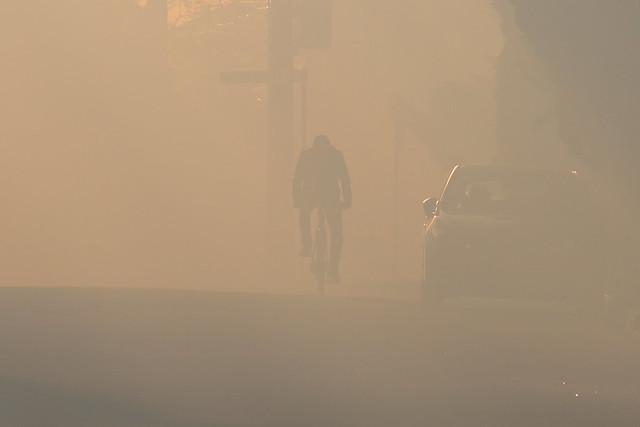
Saturday morning after the hazard reduction burn. The smoke was choking, PM2.5 levels were close to 1000 µg/m3 for 4hrs
After last years terrible fire season I got interested in particulate matter air pollution from smoke and other sources and It’s effect on health. Inspired by this post I ended up buying some parts so that I could put together my own PM2.5 and PM10 detector. There are plenty of ready made detectors you can buy but I figured if I made my own I’d be able to customise it and add functionality that you’d normally have to pay a premium for. It’s also a lot of fun to build these projects and learn along the way!
Grey Goshawk
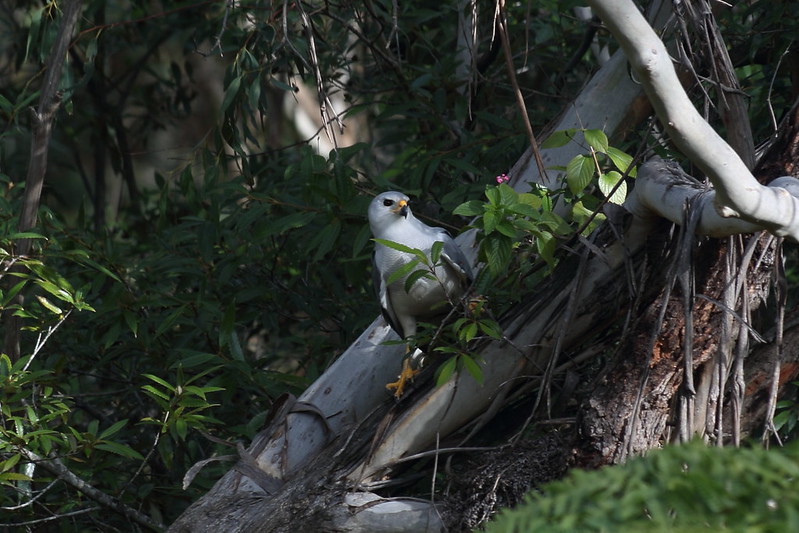
Grey Goshawks are a frequent visitor to the area, up until now I’ve not been able to identify or get a good photo of one. Last week I heard the sound of a screeching flock of cockatoos off in the distance, as they got closer the sound got louder. They were swooping and swerving making a huge racket, in front of them was a hawk! It looked like they were chasing it away! A few days later I spotted it sitting in a tree out the back and managed to get these photos.