ABC Radio National science podcast
April 29, 2014
ABC radio has some really good shows, including a whole bunch of science shows. They offer an awesome podcast feed that combines all their science programs plus any scientific segments from other shows into one. ABC hides this feed really well, whenever I have to reload my podcasting app (with my luck with phones, way to often!) it takes ages to locate the feed again.
Well I finally found it, so here it is for the next time I need it, and for anyone else that may enjoy this gem that the ABC hides so well.
By Joe Lipson
read more
Camouflaged Gecko
April 27, 2014
I was moving an old pile of timber out in the back yard over the weekend, hiding in amongst it were 2 Broad Tailed Geckos. I only actually saw one, which had dropped it tail and run off. I knew there was at least one other as there was a second tail writhing about on the ground. The tails moved as though they were alive, made me wonder if they can drop their tails at will as a diversion when they sense they are about to be preyed upon. I’d placed my jacket on the ground while I was working, when I picked it up a few hours later this guy fell out! Geckos look cool and I always like to see them, I was extra impressed with how effective it was camouflaged against the natural sandstone.
By Joe Lipson
read more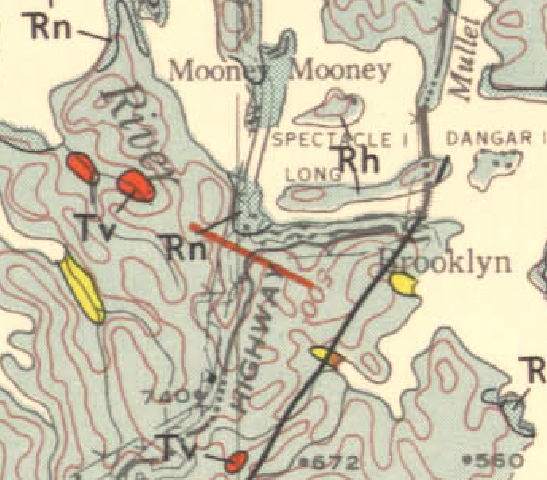
Igneous Dyke near Brooklyn
April 16, 2014
An igneous dyke is where molten magma has forced it’s way up into a crack between existing rocks. Dykes can extend for many kilometers in lines on the surface. There’s a dyke marked on the Sydney 1:250,000 geological sheet that cuts across the M1 and old pacific highway just south of the Hawkesbury River. It’s mentioned in the “Geology along state highways” section of The Field Geology of NSW. I’ve tried to spot it many times while driving down the M1, I think I’ve seen it but it wizes by so fast it’s hard to be sure.

By Joe Lipson
read more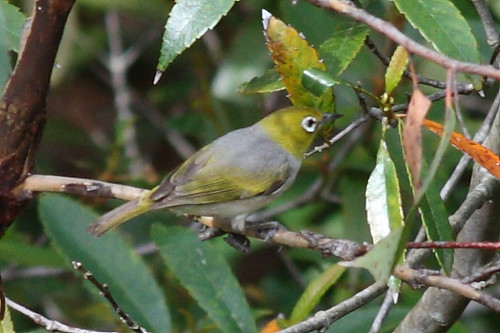
Silvereye
March 24, 2014
Zosterops lateralis
Another common bird that I’ve only recently identified in the backyard. The Silvereye gets it’s name from the distinct patch of white around it’s eyes. It’s a small bird, only 11cm – 13cm in length, it moves about quickly making it hard to spot and identify. Silvereye live on the coast and adjacent inland areas of almost all of the country, they’re also found throughout New Zealand and southwest Pacific islands including Lord Howe, Fiji and Vanuatu.
By Joe Lipson
read more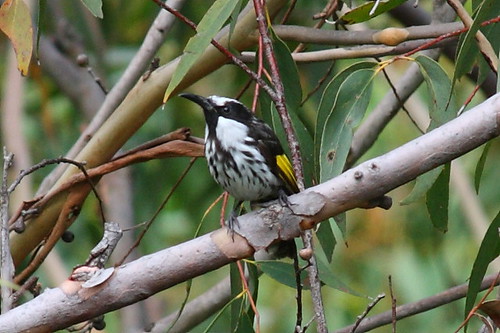
New Holland Honeyeater
March 17, 2014
Phylidonyris novaehollandiae
Another ( former ) unknown bird in the yard. It’s a New Holland honeyeater, a not uncommon bird that’s distribution stretches from the southern Queensland coast, all the way down the east coast, throughout Tasmania, then westwards following the mainland coast wrapping up a few hundred km north of Perth. They’re small birds reaching a maximum size of 20cm. This one was hard to photograph, it kept moving about, not staying still for long at all.
By Joe Lipson
read more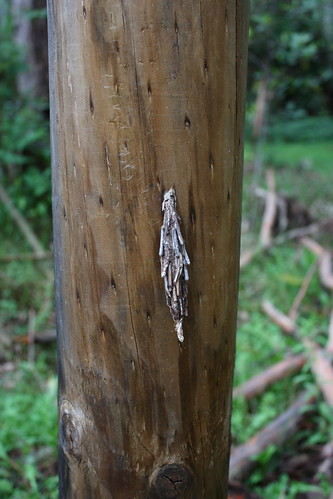
Saunder’s Case Moth Cocoon
March 8, 2014
Metura elongatus
This cocoon was on a post at the start of the Little Blue Gum Creek walk. It’s large, about 15cm long, with sticks woven into the sides. I remember seeing many like this when I was growing up but had never known what animal made them.
Saunder’s Case Moth Cocoon at the start of the Little Blue Gum Creek boardwalk.
A quick search pointed to it being a Saunder’s Case Moth cocoon. During their caterpillar phase case moths make their cocoons out of silk, most species attach sticks, leaves or other debree as camouflage. Each species had a distinct type of cocoon, but they are also constrained by available materials so even within a single species cases can vary in materials and appearance.
By Joe Lipson
read more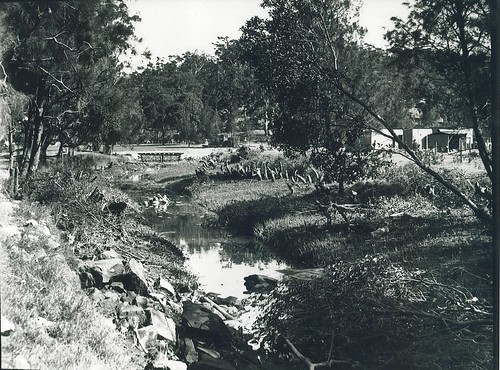
Little Blue Gum Creek Boardwalk
March 6, 2014
I really enjoyed looking at the photos of the construction of Lady Game Drive, something that kept popping up in them was Little Blue Gum Creek. I must have driven down there a million time but I couldn’t place it.
Little Blue Gum Creek : Lane Cove National Park (1939 ?)
After a quick search I found were it is, and also that there is a short boardwalk through the bush at the creek. It’s nearby so in between rain showers last weekend we ducked down there with the kids to take a look.
By Joe Lipson
read more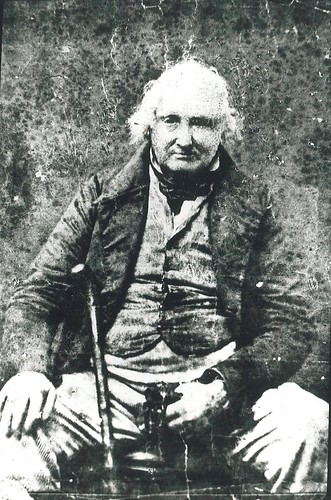
Old photos from the Ku-Ring-Gai area
March 1, 2014
Ku-Ring-Gai library has been posting old photos from the area ( including some from Garigal ) to it’s Flickr account . What a great way to make access to it’s archives more convenient. I didn’t even know the library had the photos until I came across one of their online postings by fluke when searching for pictures of Bungaroo.
William Henry, the first settler in the Lane Cove Valley. circa 1860.
By Joe Lipson
read more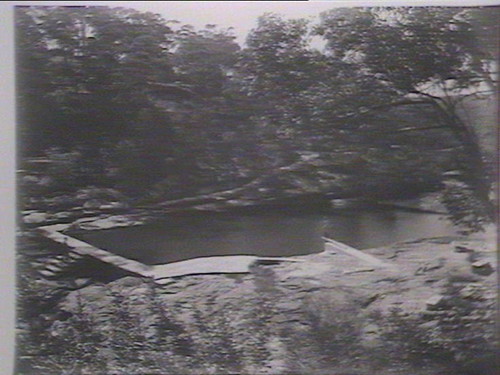
Swimming pool at the Cascades
February 3, 2014
The Cascades is located at the junction of Middle Harbour and Frenches creeks inside Garigal National Park. Here both creek beds open from narrow winding channels onto wide expanses of potholed and weathered sandstone. It’s a picturesque and popular location with 3 well maintained fire trails leading into the area from Belrose, Davidson and St Ives. In another exchange with John I learned that the Cascades has an interesting history. As a depression era work project a dam wall was built at the base of one of the two large natural pools to create a large public swimming pool. John sent a photo of how it looked when it was in operation. It reminds me of the ocean pools that occupy the rocky headlands of the nearby northern beaches.
By Joe Lipson
read more